Showing posts with label magic. Show all posts

Saturday, July 25, 2026

Mazes and Minotaurs: d30+ Gods to Show Up for a Minor Intervention

Sometimes a player might make a Minor Intervention without being very specific, or maybe the god they named is busy at the time. Here's a vague list of gods, mostly historical, that might show up instead. I've tried to make it so that the neighbors of each entry are related in some way. The GM may of course decide how the god reacts, but a default behavior is also listed.

  1. The Moirai, goddesses of Fate. Mostly just here to giggle, but might give prophecy.
  2. Dike, of Justice. Stern and totally impartial, will cut a liar's tongue out.
  3. Aedos, of Shame. A veiled woman with a diffident mien, but audacious in word, will reveal whatever people don't want revealed.
  4. Nemesis, punisher of hubris. Sympathetic to the unlucky, spiteful if you've prospered
  5. The Furies, punishers of sin. If you did kinslaying or breached xenia, will try to kill you. If not, sit around picking their noses.
  6. The Graces, givers of gifts. Will cure one curse (of yours or the enemy), or double your Personal Charisma temporarily.
  7. The Hours, of fruitfulness. Their mere presence speeds the growth of plants, but mostly they just dance about.
  8. Calliope, of Epic poetry. Beatifically bored, wants to see or hear something interesting.
  9. Clio, of History. Will tell you, at length, the details of local history and folklore. Mystic fortitude save to stay awake.
  10. Euterpe, Erato, Polyhymnia, of Song. The game is a musical now, no more talking only singing.
  11. Terpsichore, of Dance. Everyone present gets +3 to their Grace score temporarily.
  12. Thalia, of Comedy, and Melpomene, of Tragedy. In an extended and lively debate about how this should end.
  13. Urania, of Astronomy. Very agreeable, if sleepy, by daylight; Would like you to leave her alone at night.
  14. Iris, of the Rainbow. If she actually shows up, she has a message for you. It's very important.
  15. Hermes. Sometimes just shows up!
  16. Pan, of the countryside. Will likely scatter everyone about, like they all got drunk and woke up somewhere random. After this, will randomly bother the scattered party members.
  17. Eros, of sudden Love. Will select either the two most likely partners, or the two most unlikely partners, and target them with his arrows (which they might dodge).
  18. Morpheus, of sleep. Will send all present to sleep, and give them a collective dream, which might be pretty helpful for conflict resolution (50% gate of horn, 50% gate of ivory).
  19. Thanatos, of death. 50% he has come for a random person present. If he hasn't come for a specific person, might be persuaded to end someone early.
  20. Hebe, or Ganymede, of youth. They (whichever is present) bear the cup of youth, and offer a sip from the worthiest (highest level) mortal present (they can then offer this to an ally). Restores all health and reduces their age by 2d6, down to 16 at lowest.
  21. Heracles, of heroes. Gives 100 glory (mazes and minotaurs XP for fighters) to the hero with the highest glory.
  22. Asclepius, of health. His first concern is the sick, dying, and dead; Will cure the most dire present (including bringing the dead or undead back to life).
  23. Aristeaus, of bees. Believes the situation can be only improved with the addition of a considerable quantity of bees; They aren't angry but there sure are a lot.
  24. A Nymph, of whatever is most prominent in the vicinity. Much older and more powerful than player character nymphs. Character (1d4): 1. Amorous 2. Dread 3. Innocent 4. Wise.
  25. An Anemoi, of the Winds. Anemoi (1d4): 1. Bearded and grumpy Boreas 2. Youthful and refreshing Zephyrus 3. Warlike and Blustering Notos 4. Contemplative and sullen Eurus.
  26. A Nephele, or more likely quite a few, of the Clouds. Delightful encouragers of philosophy and fantasy and apparent enemies of common sense; Will speculate for hours.
  27. A Lampad, or more likely quite a few, of Torches. Silent, mischievous, beckon for you to follow (1d4): 1. into the underworld (maybe back out) 2. into a sacred grove 3. up to the starry heavens 4. to be hopelessly lost.
  28. Hecate, of magic. Gives 100 wisdom (mazes and minotaurs xp for wizards) to the hero with the highest wisdom, and changes one curse, enchantment, or fate into something stranger.
  29. Proteus, of the sea-change. All know his challenge: To the one who can hold him through 3 of his transformations, will tell the future or grant some (broadly beneficial, but possibly weird) change to their physical forms. If you can't, suffer mutation.
  30. Chronos, of time. Unlike most gods, who are flighty and fickle and prone to their own desires, he is very patient, and will slow down time or stop it to hear and consider the situation. Surprisingly, perfectly willing to send you back in time. Resolving paradoxes (or choosing not to resolve them) is his job, and he loves his job.

You can and should comment more gods to add to the list. Default behavior is optional.

Tuesday, December 10, 2024

Counterspells, Magic Detection, and Dispelling

To be used as houserules or alternate class features

This one has been sitting in my drafts for a while. It is unfinished but I'm putting it out anyways because I likely won't finish it, and it might inspire someone.

Counterspells

'Counterspell' is not a spell in itself. It is a category of procedures applied to any given spell to make the spell simply not work. These can range from casting the opposite spell (Shatter vs. Mending, Fire vs. Water), to simply distraction (mundane or arcane), to stealing the energy of the spell. When a wizard or magically adept character sees a spell being cast, they can attempt a counterspell. Roll a contested check: on the countering side, d20+[Caster level]+[Spellcasting Score]; on the casting side, d20+[Caster level]+[Spellcasting Score]+[Spell Level]. The countering magician may use a spell to increase their bonus, adding the spell's level to the roll (or double the spells level for an opposite spell).

If the Caster wins, the spell prevails, and the counterspell possibly has a mishap. If the Counterer wins, they may consult the following table and choose one option in accordance with the difference in the rolls.


Difference Effect
1 Deflect: The spell changes direction just before it reaches the target, up to 90 degrees

Enfeeble: The spell falters, only producing half the effect
3 Distract: The caster makes a concentration check. If they fail, the spell wild-surges, explodes, mishaps, or dooms

Rewind: The spell is returned to the caster, and any spell used to counter is also returned.

Shatter: The spell splinters, dealing [spell level]d6 or [spell level] damage to its target
5 Negate: The spell does not work

Awry: The spell has a different (but not opposite) effect. Fireball may become wind-ray, cure wounds becomes cured meats, etc.
7 Siphon*: The counterer absorbs the spell's energy, which may be stored in magic items or as spell slots

Reverse: The spells effect reverses completely. Fireball becomes water-pseudosphere, cure wounds becomes cause wounds, etc.

Reflect: The spell now targets the caster (or a random creature if it already targeted the caster)
9 Explode*: Choose a point on the spell's original trajectory. The spell explodes at that point, dealing [spell level]d6 damage in a [spell level]*5 ft. radius

Doom*: The spell triggers a doom in the caster, or causes the worst possible mishap or wild magic surge.
11 Seal*: The caster can no longer cast magic for [spell level] (roll d[spell level]:
1. seconds 2. minutes 3. hours 4. days 5. weeks 6. months 7. years 8. decades 9. permanent)

Steal*: The counterer learns the spell and the caster forgets the spell.
As well, the counterer gains a temporary spell slot of the spell level.

Unravel*: A wild-magic or null-magic zone is created around the caster
13 Death*: The caster is killed

Magician's folly*: The caster is effected by a permanent effect, transfiguration, enchantment, or curse of the the counterer's choice, subject to DM discussion.
* these options also negate the spell

Magic Detection

Magic detection is, of course, not a spell either. Rather, it is a suite of tools, lore, mathematics, neuroses, and mutations that allow wizards to perceive the structure of spells, supernatural influences, and invisible creatures.

A knack will here mean a supernatural mutation, mnemonic device, or neurosis which may aid in detecting magic. A bauble is a physical tool such as a lens, crystal, or fetish which helps one do the same. Certain divination spells may also assist. Familiars may also help.

Knacks and Baubles have certain intended targets (e.g. fairy magic, divine magic, fire magic, etc.). Both have a 1 in 2 chance of positively identifying influences of that type, a 2 in 6 chance of positively identifying neutral magic, and a 1 in 4 chance of correctly detecting magic of a very different type. As well, both have a 1 in 6 false positive chance. Divination spells have a flat chance (1 in 4 for cantrips, 2 in 6 for 1-4 lvl, 1 in 2 for 5-7, 4 in 6 for 8-9. 1 in 10 false positive for cantrip-4th lvl, 1 in 20 for 5-9).

Knacks may be used quickly (in 1 round), but the use of a knack deals 1 wisdom damage and prompts a save vs. wizard eyes. Baubles take 1d6 rounds to find, set up, and use, but do not have any ill effects. Divination spells of course take a spell slot. Multiple tools may be used in succession, and this is recommended.

[Example: Algol the Hidden has 2 baubles and 1 knack: A quartz orb (detects wizardry), a sorcerer's mask (detects spirits), and a third eye (detects dark magic). While travelling, they encounters a man they suspect is a werewolf (he, in fact, is). They first examine with the mask (werewolves are acceptably close to spirits, 2 in 6). They looks through their mask and sees a fearsome, if ethereal, wolf form over the man! Or wait, maybe that's a trick of the light, or simply a wolf spirit, since it soon passes (in fact, it was a false positive and has no bearing on the man's nature). 

Algol, now unsure, looks through their quartz orb (werewolves are very different than wizards, 1 in 4). Nothing comes of this. Maybe he isn't a werewolf? Greatly concerned, Algol peers with their third eye (a discussion of whether werewolves are dark magic ensues. It is decided they are. Also, Algol suffers 1 Wis damage and makes their save for Wizard Eyes). Algol sees the stain of death on his teeth and the wicked claws of his true form! They were right! After a small skirmish, the man is justly imprisoned.]

Wizards begin with 2 baubles and 1 knack. Sorcerers and Warlocks begin with 2 knacks and 1 bauble. Knacks may be gained from magical deals, maddening texts, and certain potions. Baubles may be purchased from other wizards, crafted with special ingredients, or stolen. Some baubles may be used by mundane characters.

Some Baubles
  1. Erratic Clock (Chronomancy)
  2. Magician's Pendulum (Magic Items)
  3. True Quicksilver (Necromancy)
  4. Otherworldly Ring (Planar)
  5. Elemental Barometer (Elemental)
  6. Scope of Many Lenses (Wizardry)
  7. Shamble (Witchcraft)
  8. Phantasmagoric lantern (Illusion)

Dispelling

Technically, dispel magic is a spell. The spell is a brute force form of a more general principle: spells may be disrupted by altering the delicate but mundanely untouchable structure of a spell. This is easier and more graceful if the dispeller knows the workings and nature of a spell (found by magic detection or guessing)

Friday, October 6, 2023

GLoGtober 2.1: Castles in the Air (Hypogeum)


Its GLoGtober once again, and though I pretty much missed last year, I thought I'd return to form with some Hypogeum-posting. The prompt this time is "Atlantis-type situation but in reverse. It goes up instead of down."

Angels (also called Harpies, or simply the Winged People) are a race generally considered legendary in the Hypogeum. It is said they have wings rather than arms, and live in floating cities obscured by the haze of the upper reaches. Which is rather preposterous, isn't it? If humans developed wings, they could never use them to fly. They're too heavy! And floating cities? How would they navigate the narrow archways and passages that connect caverns?

Nevertheless, they are real.

(Spoilers ahead)

Angels are a race of sorcerers. Magic doesn't run in their blood, however. It runs in their feathers. Angel feathers are uniquely adapted to collect and store ambient magic. However, they use this great power rarely. This is because, without it, they would fall out of the sky.

Magic, as everyone knows, is a pervasive gas which tends to collect in liquids or crystals, suspended like the carbonation in a soda. Contrary to this force of suspension, magic is much lighter than air. This is why angels can fly, and why powerful sorcerers are such whimsical assholes: they take themselves lightly.

Because their wings collect magic, frequent flight actually makes it easier to fly, rather than tiring them out. However, an excess of magic in their wings can be rather uncomfortable in daily life (rather like being constantly tugged by your lapels). Since water can easily take up magic, it is easy to wash off, and produces quite potent magic potions. When they are flying, the water condensation on their wings often drops to the ground as droplets, often incorrectly called Angel Tears. When they are at rest, they save these magic potions for a different purpose.

The cities of the angels are diverse. However, contrary to popular belief, they are seldom monolithic structures. But they tend to have this in common: like the angels, they float by magic. Most angelic cities are aggregate structures, with each building or household being held aloft by its own means, and tied to other buildings by ropes. The means by which they hold magic vary: some employ balloons, while others are built around highly thaumiferous plants or minerals. The maintenance of these means is the main use of angel tears among angels themselves.

Rarely, lone angels or solitary clans will build their homes on large aerial darkbeasts. Though this often prevents them from joining a larger angelic city, it is generally agreed to be sick as hell.

The aggregate and modular nature of most angelic cities explains the conundrum of travel. When they wish to enter another great chamber in the hypogeum, they simply lead their buildings through whatever passages are necessary in single file. As well, it is entirely possible for certain buildings to break off and gradually reassemble a city-of-theseus elsewhere.

The extreme concentration of magic in their society obviously makes them targets for ambitious sorcerers and agents of the dragon. This is the reason for their extreme isolationism and nomadic lifestyle.

Thursday, September 14, 2023

For thrice ten thousand dwell on mother earth, Immortal (GloG: More gods for Adventurers)


The Twins (the Lovers, the Protectors of the Universe, the Wanderers)

A pair of messenger gods, male and female, who are probably not the same creature. They are considered subservient deities, receiving their power from many other gods. They are widely worshiped, yet have no cult-center. Being always moving, it is considered that one may worship them anywhere and receive their favor anywhere (albeit infrequently). They are thought of as intercessors, gift-givers, and patrons of humanity in general (as opposed to particular city states). It is said they invented mail, Angels, and bees.

(Digression on Angels: lower-case "a" angels, also called daemons, are spirits, animals, and minor gods in the employ of a god. They deliver messages and miracles (and MD) to people. They can generally look like anything. Upper-case "A" Angels are those guys with wings. They are also spirits, and mostly serve as lower-case "a" angels, but they have a union. Some Angels were once mortal).

The Twins are symbolized by Feathers, Mirrors, Eyes, Halos, Scales (both senses), and Honey

If you make an offering to the Twins by one of their shrines, there is a 4-in-6 chance each day that it will be taken by an angel to them, leaving in return an MD. If you try to make them your patron gods without actually offering to them in person, there is a 3-in-6 chance your offering gets eaten by one of their angels instead. The Twins know the following spells:

  1. Cure Wounds
  2. Featherfall
  3. Message
  4. Light
  5. Paper Automaton
  6. Mirror Image
  7. Master Ludwig's Guiding Lights
  8. Speak with Birds
  9. Control Air
  10. Grow Wings
  11. Elegant Judgement
  12. Resurrection

An Angel of the Twins knows (1d3)d4 of these spells, rolled with d12.

Laras-Ep-Korash (the Wise, the Opener of Ways, the Architect)

Laras-Ep-Korash is in many ways a typical god. He was a sphinx, deified in the city now bearing his name. He was a rather lawful creature before his deification, and so he remains. But as much as he loves laws, he loves loopholes, and as much as he loves riddles, he loves when they are solved. As such, he's rather fond of adventurers, even of a chaotic type, and especially wizards. He's considered the patron of several secret societies, both of wizards and of lawyers.

He is symbolized by Keys, Rams (both senses), and Floating Stone. He really enjoys long and repetitive poems praising him.

Laras-Ep-Korash has 7 MD. However, 4 MD are normally spent on various patronages. He has the following spells:

  1. Lock
  2. Knock
  3. Deflect Spell
  4. Orbiting Spikes
  5. Wizard Vision
  6. Wall of Stone
  7. Track Leylines
  8. Death Ward

Avikal (The Champion, The Nail-Driver, The Sudden)

Avikal is a hero, as well as a god. He was born, it is said, by the Father of Winds and Rains, and certainly has something of a meteoric nature. He blessed the city of Gorable with his patronage, but roves far and wide slaying monsters, and imprisoning those he can't slay. He was the one who imprisoned Pysoloth beneath Charpysos with his Lightning Stakes. There's a festival every year where people reenact his various conquests (both senses) in pantomime, often against papier-mache monsters (which might even be more gruesome than the originals).

He is symbolized by Nails (and consequently Hammers), Borders, Fur, and Dry Lightning.

Avikal has 6 MD and gives them out rarely to really cool people. He knows the following spells:

  1. Hold Person
  2. Geld Animal
  3. Mighty Thews
  4. Imprison
  5. Magic Weapon
  6. Lightning Bolt

Monday, August 14, 2023

Whoever You Be, Baffling our Efforts to Behold You (GloG: Deities for Adventurers)

 Some gods, somewhat arising from this. Probably I'll do more at some point.

Comus (the All-Great, The Heart-Kindler, The Night's Consolation)

Comus is the wildly popular living god of revelry, change, and adventurers. He lives in Ortom, where he was originally deified several centuries ago. He invented satyrs, and a considerable portion of his power was spent into creating the rite of Carousing. The Feste is held once a year in his honor, and thousands flock to Ortom to offer sacrifices and participate in the drinking and cross-dressing. It is said that he selects two people who attend and trades their faces (or, some say, their fates).

Comus is symbolized by torches, moons, flies, incense, and flint. And wine, obviously.

Comus is a greater god with several minor gods beneath him. He has the following spells: 

  1. Disguise
  2. Fear
  3. Water to Wine
  4. Flip Person
  5. Control Flame
  6. Moonlust
  7. Grease
  8. Charm Animal
  9. Become Delicious
  10. Forceful Boor
  11. Sway Crowd
  12. Polymorph

His minor gods have a selection from among these spells, and typically 3-4 MD. If you venerate him exclusively, you get these cantrips:

  1. You can crowdsurf on any crowd. This includes hostile ones.
  2. You can elect not to spill liquid from a cup in your hands, or to spill it selectively.
  3. Once per night, you can cause moonlight to become bright light within earshot.

Pysoloth (The Chained-Calamity, the Misshapen, the Lament of Laughter)

Pysoloth is the god of Charpysos. He is depicted as a kind of hairless dog, or swollen snake. He was a demon, and it is claimed he is kin to Virs. He was semi-successfully placated and mostly imprisoned below Charpysos, and now acts as a guardian deity of sorts. He is a spiteful god of disaster and deformity, and one of several gods who created goblins independently. Superstition holds that speaking his name will cause a petty misfortune to befall you or (usefully) a nearby goblin. He thinks its hilarious.

Pysoloth is symbolized by dogs, snakes, lightning, birthing huts, and beards

Pysoloth is not widely worshipped, but powerful in his own right. He has 6 MD (4 on his own) and the following spells:

  1. Sticks to Snakes
  2. Stormcaller
  3. Monsterize
  4. Violently Depilate
  5. Curse
  6. Mutate

He may also grant the cantrip:

  1. A misfortune befalls a goblin you can see. Works once per goblin.

Kerteras (The Fallen Sun, the Protector, the Weaver of Raiments)

Kerteras was once the god of an empire which stretched over much of the known world. His origin is highly disputed, but he took on the title of the god of the sun. When the capitol was eventually put under seige by the tactical genius Lyr, the flow of offerings was interrupted. Worshipers turned to their own local gods, previously subservient to Kerteras, and even those gods who were loyal had no way of communicating their power to Kerteras. This led to Kerteras losing most of his power, the capitol falling, and the empire collapsing.

The worship of Kerteras was forbidden by the occupying (now ruling) force, but the existence of remnant cults is an open secret. Most ruins of the old empire contain a shrine to Kerteras, and he is now revered as a god of ruins and hidden gold. 

Kerteras is symbolized by Suns, Gold, Robes, Eight-Petaled Flowers, and Eight-Legged Creatures

Kerteras is now a minor god with only 3-4 MD at a given time, though he has a Lot of MD inaccessible in shrines. However, being once-great, he possesses many spells:

  1. Cure Wounds
  2. Hold person
  3. Summon Candles
  4. Speak with the Eight-Fold
  5. Entangling Web
  6. Detect Gold
  7. Force Field
  8. Circle of Frost
  9. Spiderclimb
  10. Summon Vestements
  11. Wall of Earth
  12. Plague of Sunstroke

Kerteras also established cantrips for his followers, which still work for those who worship him exclusively:

  1. Once per day, produce 10' of rope (from your fingers) or a bottle-worth of ink (from your tear-ducts). Both are flecked with gold (and illegal in the once-capitol). The rope rots within a few weeks, and the ink coagulates if unused.
  2. Speak a one-word command. Any number of people you can see follow it for one round. Works once per person.
  3. Create a tiny light as bright as a match on your fingertip.

Wednesday, August 2, 2023

Hypogeum Classes, Revised

I was looking over my Hypogeum Classes recently and, wow, they are bad. There's a whole class for heists. Heists! Completely irrelevant to the game. So I'm making them better.

Percichen on Tumblr, I think

Sword-Artist

Sword-Artists are those who kindle and unleash their Life, transmuting it into Magic. Unlike sorcerers, they don't need to supplement their Magic with potions. However, their chaotic and fiery Magic is pretty much completely useless for spells. Instead, they just punch people clean in half. Sword-Artists are commonly found among Humans and Darklings. Greyfolk are less common, and Folk are rare to say the least. Skeletons cannot become Sword Artists.

Each template of Sword-Artist gives +1 To-Hit

A: Sword Art, Soul of Flame
B: LIKE LIGHTNING
C: War Aspect
D: Life-Drinker

Sword Art
By focusing for one round, you may unleash an attack that always hits and deals an extra d4 damage for each sword artist template you have. If this doesn’t kill them, you’ve misaligned your meridians and can’t use this until you rest.

Soul of Flame
When you attack with a Sword Art, white flames kindle around you. You do not control these fires, but they do not hurt you. Your next turn, if there is anything flammable nearby (besides your own clothes), your fires will start normal fires.

LIKE LIGHTNING
You can choose to sunder your weapon when you use your sword art. When you do, the d4’s become the weapon’s die. For the rest of the fight, your pure killing intent functions as that weapon (though melee if it was ranged).

War Aspect
When you fight with your pure killing intent, it instead functions as any weapon you have held before. Fights don’t end until everyone you can reach in one turn is dead. You must keep fighting until the fight ends.

Life-Drinker
When you kill a being that did not die instantly to your sword art, your meridians are re-aligned, and you count as having an extra sword artist template.

Satoshi Matsuura

Strife's Child

A Strife's Child is an Adventurer, a Dancer, and a Coward. They can feel the rhythm of Battle, and move in time. Anyone can become a Strife's Child.

Each template of Strife's Child gives +1 AC

A: Motif, Abscond
B: Clever Thing
C: Battle Tech
D: Finisher

Motif
While in Combat, you may focus for a round to begin a kind of war-dance, or battle-trance, which increases the tension of all creatures in combat. When you begin a Motif, place a d6 on the table showing a one. This is the Motif Value. Increase it by one each round. All creatures get a bonus to To-Hit and Damage equal to the Motif Value. If a creature attacks with advantage, double this bonus.

You may end this effect at any time on your turn.

(Motifs stack with multiple Strife's Children)

Abscond
You may always flee combat.

Clever Thing
You have a feel for the mechanisms found in the Hypogeum, their connections and their ebb-and-flow. If you have seen a lock or key, you know its match by sight. If you find a mechanism, like a lever, by examining the floors and walls around it closely, you can tell roughly the direction its corresponding mechanism would be in (e.g. if it opens a door, you could tell what direction the door is in). You have advantage on strength checks to push large blocks, stuck doors, rusty levers, precarious statuary, etc.

Battle Tech
You may increase your To-Hit, Damage, or AC by the Motif Value (in addition to the normal Motif bonus). You must decrease another of these values by the same (e.g. if the Motif Value is 3, you could increase your To-Hit by 3 and decrease your Damage by 3)

Finisher
You may end your Motif with an attack or spell, which gains advantage. Your DM may allow you to customize your finisher with elemental damage or a special effect.

Lily Seika Jones, I think

Charm-seeker

Charm-seekers seek after charms, obviously. Charms are natural or artificial objects which store Magic and Spells. A Charm will absorb ambient magic from the atmosphere to recharge its spell. A Charm-seeker will naturally have an affinity for a certain type of charm based on their own inherent magic.

While Charm-seekers can be found in every race, each race has a different approach. Charm-seekers are most common among Darklings, who tend toward scholarly obsession. Folk Charm-seekers are very cautious and wary, while Humans tend to be experimental and flippant with charms. Skeleton and Greyfolk Charm-seekers tend to be very ostentatious.

(Digression: Charms are items that contain a spell and at least 1 MD. Anyone can use them, but if the MD are used up it normally takes like a week for it to recharge. Also, if a scroll has its MD used up it just crumbles. A used up charm can't be used to cast as a Charm-seeker)

A: Relic
B: Affinity
C: Ritual, +1 MD
D: Aspect

Relic
You possess a charm which resonates with your heart, called your Relic. It gives you two spells and +1 MD which recharges over 24 hours (in addition to the MD contained within that takes a week). Your Relic determines the type of Charms you seek (e.g. a Fire Wand means you seek Fire or Wand charms). You can cast spells contained in charms with the MD your Relic gives you (not the one it contains).

If you lose your Relic or you find a Charm which better resonates with your heart, you can spend a week attuning to it. The new charm must be one that could have been used by your old Relic (e.g. you couldn't start with a fire wand then change to a water orb, at least without changing to a fire orb first).

Affinity
You've grown in your connection with your Relic, and you come to understand some of the Forces of this world through it. You can identify when something is aligned with the same Force as your relic. When you encounter a creature aligned with that force, you can reroll the lower die of the reaction roll.

Ritual
You can destroy a charm for even greater power. When you do this, you may add another MD (in addition to any you spent on the spell and the MD contained withing the charm) to the spell the charm contained. You may also attempt to create a different effect related to the Charm's spell.

(You can't do the first effect with a scroll, but you can do the second)

Aspect
You can perform a Ritual (see above) with all your MD that can manifest the unique synthesis of your inner magic and the Forces of the World. You are clothed in a raiment of power and can summon a unique and legendary weapon for [sum] rounds.

Charm-Seeker Mishaps
1. MD only return on 1-2 for 24 hours
2. Take 1d6 damage
3. Random mutation for 1d6 turns, then save. Permanent on Fail.
4. Obsession. For 1d6 hours, you pick up and refuse to let go of anything related to your Relic
5. You accidentally drained your charm. Add 1 to your [dice] total.
6. You accidentally broke your charm. Luckily, it's reparable. You can still try to cast with it, but it might break.

Varguy

Sorcerer

A Sorcerer is anyone who consumes distilled magic, though most people only use it to refer to someone who uses it regularly. While everyone has an inner magic, most people don't have enough to make use of their spells. Drinking distilled magic gives the Sorcerer the power to cast the spells of their inner being. It also gives them uncanny visions and otherworldly insight which can lead to madness.

As they use magic, it begins to take root in their being, and their minds become more and more attuned to capturing magic from the atmosphere.

Drinking distilled magic can be done by anyone, giving them the first template of Sorcerer. It also deals 1d6 damage to charisma or wisdom. It lasts 24 hours, or until you lose your MD, and all sorcerer templates are lost when it wears off. Gaining or losing sorcerer templates does not mean gaining or losing levels. A first level sorcerer who runs out of Magic loses his sorcerer templates, but is still first level.

Each sorcerer template gives +1 Maximum MD

A: Spells, Distill Magic, Odd Insight
B: The Twelve Branched Wand
C: Palimpsest
D: Wizard

Spells
You know two spells. One is Sorcerous Blast. The other is determined randomly or chosen by you or your DM. You know how to make a Charm so that you can cast these. You also know how to make an impromptu Charm called a Shamble. This takes a minute and some trash. It lasts an hour, or one use, and can't be used by others.

Distill Magic
You know how to get magic out of things. With a way to boil liquids and condense gases, you can produce a dose of Distilled Magic. This takes a magical ingredient, 3 rations, or a large amount of weeds and herbs. You can also distill magic and spells out of charms in a much riskier process.

Odd Insight
When you read a book, examine a mural, or question someone, you can take 1d4 charisma or wisdom damage to ask an additional question about it. This represents the arcane workings of your mind making a deductive/mystic leap, rather than literally reading another fact or asking another question.

The Twelve Branched Wand
You learn two more spells, and Distilled Magic doesn't wear off until you lose all your MD.

Palimpsest
You regain 1 MD per Long Rest, and can edit your spells by rolling your MD. You can make 1 change for each 6. Negotiate with the DM.

Wizardry
You can make an impromptu, one-use edit to a spell if [highest] is 6.

Sorcerer Mishaps
1. MD only return on a 1-2 for 24 hours
2. Take 1d6 Damage
3. Random mutation for 1d6 turns, then save. Permanent on Fail.
4. Blind 1d6 rounds
5. You smell like magic. Magic eating creatures will be drawn towards you until you bathe
6. All your magic comes out of you in an arcane sneeze, everyone saves vs. being dazzled


For Sorcerers and Charm-Seekers, when you first roll a doom, select Obsession, Rejection, or Transformation. You follow that doom track for each subsequent doom.

Obsession
1. You become obsessed with your source of power. You must immediately seclude yourself for 1d6 days to pursue your power (contemplating your relic's force or brewing way too much magic). If you do not, you take 1d6 permanent Wis or Cha damage.
2. Every day you don't pursue your power, you take 1d6 permanent Wis or Cha damage
3. You abandon all other goals and seek to become the WISEST WIZARD. Make a new PC.

Rejection
1. Your magic leaves you for 1d6 days.
2. Your magic leaves you for 1d6 days, and you cast your most harmful spell targeting yourself with max MD (does not trigger mishaps or dooms).
3. All the magic leaves your body permanently. Save or Die.

Transformation
1. Gain a beneficial mutation. Gain +1 MD.
2. Gain a malignant mutation. Gain +1 MD.
3. Become a Monster. Make a new PC.

They say Doom can be avoided by slaying the Dragon


Saturday, July 29, 2023

Take Not Thy Thunder From Us (GloG: Priest)

 The gods do not hoard their power to themselves. As we give to them, they give to us. Thus, we have the priests. It's a good thing too. Those gods are a fickle and inhuman bunch, but the priest will always help the people.

A Cleric to go with the last post's gods

Class: Shrine Priest

Starting Equipment: Ceremonial Robe, Ceremonial Mask

Starting Skill: 1) Ritual 2) Law 3) History 4) Farming 5) Nature 6) pick any

A: Offerings, Divine Magic, +1 MD, +2 spells (1-6)
B: Blessing, +1 MD, +2 Spell (1-8)
C: Shrine, +1 MD, +2 Spell (1-10)
D: Pantheon, +1 MD, +2 Spell (1-12)

Offerings
You know the rite by which magical power can be given to a monster to turn it into a god. Generally this requires a food offering and the worship of at least 10 people (excluding you).

Divine Magic
You can cast spells as given to you by the gods. Work with your DM to create a list of 12 spells. These spells are given by your patron gods and should be split up amongst them. For instance, a priest who worships Virs, the Serpent of Usan, and Ulorin, the goddess of wisdom, would have a spell list like the following:

1. Lock (Ulorin)
2. Knock (Ulorin)
3. Package Neatly (Ulorin)
4. Control Rain (Virs)
5. Extract Venom (Virs)
6. Stoneskin (Virs)
7. Compartmentalize Mixture (Ulorin)
8. Cure Wounds (Virs)
9. Saw and Plane Tree (Ulorin)
10. Scorching Ray (Virs)
11. Serpents of the Earth (Virs)
12. Land Gate (Ulorin)

Your patron gods are located in specific places. When you go to those places, you get your Miracle Dice. Keep track of which MD you get from which god. MD can only be spent to cast spells from the god who gave it. Each level, you get +1 Maximum MD and +2 spells. To level up, in addition to other requirements, you must go before one or multiple of your gods. You may only receive spells from gods present when you level up, but you can negotiate for which spells you get.

(At the DM's choice, you might get Sacraments (cantrips) from your gods, or have specific blessings and bans imposed by your gods. The DM may also change these features and your spells at will, as the gods change their fickle whims)

Blessing
By sharing a meal with someone, you can bless them, giving them 1 MD and the ability to cast one of your spells.

Shrine
You can construct a shrine to one of your gods which can store MD. It takes about a day to construct a 1 MD Shrine, which is little more than an idol under a roof. It does not fill automatically: you or another priest must confer the power of your god from his presence to this shrine. Excessive requests for power will probably draw ire.

(This allows you to build a shrine. You can always draw power from a shrine, even before you get this template, as can anyone who worships and presents offerings to its god. Most people don't call on divine power without reason, but you can't always count on your Shrine "keeping its charge")

Pantheon
You can use the MD of one god to power another's spell. MD used in this way have their depletion range increased by 1.

Stigmata

A Priest's spells are less dangerous than a Wizard's spells. After all, they were made by creatures who actually are magic, rather than some insane mortal grasping at power. However, they are designed for creatures of power, rather than for humans, and the spells are imbued with their nature. When MD roll doubles, the priest receives an inhuman mark of that nature (for instance, slit eyes or scaly skin for Virs). When triples are rolled, a more drastic mutation takes place. The priest takes [sum] damage (save for half) and receives a notable change with significant drawbacks and benefits (e.g., a snake tail instead of legs, loss of all teeth with the ability to swallow things whole, eyes that no longer see light but instead see laws). When the priest acquires too many stigmata, they stop being playable and instead become an avatar or aspect of the god or gods they worship.


Mechanical Notes on the Shrine Priest

Build your own wizard school! With the downside that you'll have to head back to home-base pretty often, or else travel around to several different home-bases to get the MD for the spells you actually want. Will probably make for a more domain based game. You could probably allow some "supplicate the local god and they give you temporary spells" for a more hexcrawl based one. I think that allowing divine cantrips would be good for either someone with a lot of different gods (so that they aren't crushed by being unable to use 80% of their spells) or someone with only one god (so that they aren't crushed by having to use their MD quickly and heading back to town).

The Priest's MD are probably interchangeable with Orison Dice, if you have those. So a commoner praying at a shrine could probably use it like that. While gods might get mad at the overuse of their power on shrines, if you do it right you could get more worshipers for your gods, which means more power for the gods, which means more power for YOU. So don't get mad when people take your MD. It's an Investment.

I wrote this mostly thinking of independent gods. If you have a shrine priest that wants a god and that god's minor gods, you're gonna have to figure that out.


Friday, October 22, 2021

Hypogeum: the Charm update

We're overhauling Relic-seekers and Sorcerers. Both now use Charms (or, if you prefer, Orbs, Talismans, Amulets, Trinkets, Baubles, Wands, Staffs, Books, Sacrificial Daggers, Urns, etc.). Charms can take any form, though every form must be constrained to these rules:
  • Charms are stored in an Inventory
  • Charms may be lost, stolen, or broken
  • Charms require both special crafting knowledge and intrinsic spell knowledge
  • Charms are art

When starting as a class, Relicseekers Charmseekers choose what kinds of charm they use, or their preferred magic type. For example, "Jewelery" or "Orbs" or "Runes" or "Fire Charms" or "Sleep Charms" or "Once owned by a Pope". Lore and Speech means you recognize charms of your kind, and can speak with adjacent creatures (e.g. Jewelry and Fire would both let you talk to dragons. Runes might let you talk to dwarves. This is really case-by-case.). Prophecy is mostly the same. So is Power Against Power. Aspect lets you manifest the ideal of your charm.
Sorcerers no longer cast directly, but receive spells which they can make into charms. They still need to consume mana potions to use the spells. Also, distill mana will no longer be a spell, rather an ability. Sorcerer's can make "shamble" charms with only pretty trash in only a minute, but these can't be used by others, can only be used once, and last an hour before becoming completely inert. Proper charms need skill, materials, and time.
Characters who aren't charmseekers can use a charm at 1 MD once, after which it becomes inert for a time (normally about a week) 


I just think they're neat
Update: Random_Interrupt has produced a table of charms (as they pondered in the comments below). They are neat, and may be useful to you!

Wednesday, October 20, 2021

GLoGhaven


:/
I do not like Strixhaven. As an MTG set, it was ill-conceived and cringey. When they adapted it for 5e (curses on its name), they further stripped it of all interest by making every subclass only affect combat (not to mention straight up forgetting what some of the schools were all about). It is egregious and I cannot abide by its very existence in the world, whether I play either game or not. There should not be a world in which Strixhaven, as it currently stands, exists. So it falls to me, the ultimate abiter of good taste, to make things RIGHT. You could rearrange these into wizard school cantrips easily.

LOREHOLD

A: You can read any language that you've never heard spoken.

B: If you have most of the pieces and spend a bit fiddling, broken things work once for you.

C: When you tell a proper story, everyone sits up and pays attention. This includes the dead. 

D: You can talk to ruins, relics, and artifacts. They are surprisingly mobile when they want to be.

PRISMARI

A: As long as you are touching it with your hands only, you can sculpt non-solid elements into solid forms.

B: You can perform a dangerous dance which causes you to become the center of attention. You can do this while attacking.

C: While performing the dance, choose two non-solid elements. You can manipulate those elements in [class level]*5' as if you were using your hands.

D: You can shape non-solid elements into creatures, though you have to take more time for bigger creatures and you can't control more than one.

QUANDRIX

A: You are a smartypants, and can estimate and calculate easily (use Wolfram Alpha) / You can do minor shenanigans: illusory duplicates, acting as though you had two extra mage hand arms, and vanishing completely for half a second.

B: You can spend up to [template] minutes calculating, after which you can summon a fractal that looks how you choose which deals [minutes] damage attacking, has [minutes] HP, and armor as chain. Very Pointy. Lasts [minutes] minutes.

C: You can cause people to think you are an expert and a great wizard by saying something about "quantum"

D: You can sacrifice a fractal to open a portal to its location, which lasts [minutes] rounds.

SILVERQUILL

A: You can create light as a lantern. You bleed ink.

B: You can use up a well of ink to summon a little imp thing. You must give it a secret (may be untrue), which it loves to tell to people (though it loves people admiring it more). Annoyingly intelligent. You can fully control [templates] instances.

C: People believe it when you lie.

D: You can use up a book's worth of ink to fly, somehow.

WITHERBLOOM

A: You can make any organic material into food, or poison

B: You can expend all your rations or all your poisons to make that many noxious pests. You can't control them at all and they love nothing more than causing plague and famine and souring cow milk.

C: You can cause bones (nonliving) to float, and living plants to grow at twice the rate.

D: If you have a whole living creature, you can make the entire thing (including the soul) into food that fully heals all who consume it (if it is the same sort of creature as the consumer, it can even revive the dead), or a potion that transforms the consumer into that creature. Both effects cause the consumer to gain some or all of the memories and feelings of that creature.

EXTRA CREDIT

*: You can keep excellent hold on an item, even if you trip.

*: You can cast spells or abilities one handed OR while running.

*: If a spell or ability would requires materials, time, etc. you can ignore that and use it as though you used the least amount of those possible [templates] times per day

*: You can use an ability at the same time you cast a spell

*: You know how to find things in any library

*: You get invited to wizard banquets

*: With lab conditions, you can keep spell or ability effects going indefinitely

*: You can slowly levitate a foot off the ground

*: In a land aligned with your college, cast with +1 magic

*: You can try to cast any spell reasonably within your schools domain with instability equal to your magic.

*: Once per template, cast a spell you don't know.


Friday, October 15, 2021

Class: Yousei


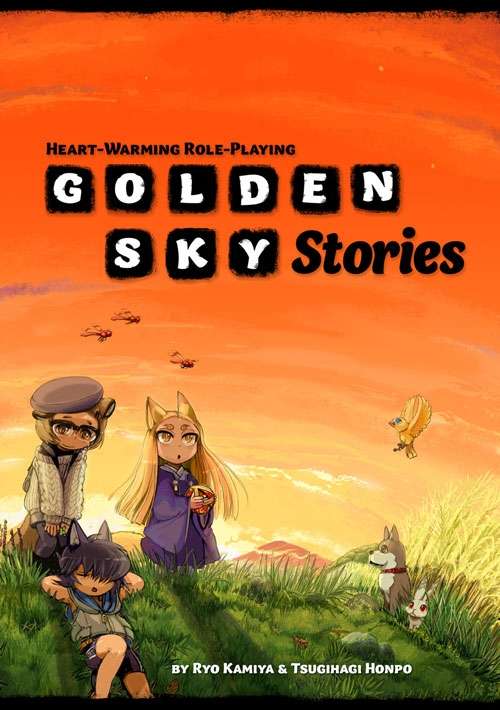
Adapted from Golden Sky Stories
You are an animal, spirit, or monster that has gained the ability to take human form. More than that, you are a being who dwells in the heart, both other's and your own, and has learned to really be a person.

A: Transform, Impression, Nature, +2 WR (Wonder Rating)
B: Appear +1 WR
C: Blessing +1 WR
D: Grand Magic +1 WR

Wonder

Wonder is the energy you use to do your little magic. You get Wonder equal to your Wonder Rating every scene (if you don't use scenes, at dawn, sometime afternoon, and at dusk). If you befriend someone not in your party in a heartfelt way, you gain an additional +1 WR for that session, and receive the same each session you talk to them. Wonder also goes away at the end of a session (unless there was no scene progress), or at the end of the day if you've not spent at least half of what you gained (and not frivolously either!).

Transform

You are not human, but you are a person. When you want to appear human, you must spend Wonder. Appearing completely human takes 4 base wonder, but appearing with some features of your normal form takes 0. +2 wonder is needed to appear at night, +4 for broad daylight, appearing at twilight, in rain, or when the moon is a certain phase (your choice) is +0.

Impression

The sort of thing you are leaves an impression on those you meet, regardless of your form. You are either Normal, Cute, Mysterious, or Scary. You can spend Wonder to modify a reaction check (one to one), but doing so makes extreme results consider you more of the quality chosen above.

Nature

The sort of thing you are has certain qualities, whether in its own nature or ascribed to it by people. The first level, and each time you level up, you can choose to take on those qualities for good and bad. For instance, you might be clumsy but strong, or prideful but able to do something supernatural, or forgetful but lovable. You can have three of these qualities at a time, and can take on or cast off up to three per level. You can temporarily ignore the weaknesses of these qualities by spending wonder as if you were fully transforming in the current scene (but you don't actually transform). Also, most abilities take some wonder to activate.

Appear

You know certain ways used by spirits and animals. You can spend wonder as though you were half-transforming to appear somewhere, provided you didn't say where you were for a while. It might take more if you are moving somewhat impossibly or to short a time had elapsed since you said where you were. 

Blessing

You can spend Wonder as though you were fully transforming to give someone else a power of yours. You may then spend extra Wonder to transfer it to them for the purposes of using that power.

Grand Magic

You can do something really wonderful that could change a person's heart. For 12 wonder, choose one power. You can use it as much as you want at no cost (you will still need to transfer wonder for Blessings). For 20 wonder, no powers have costs. For 30 wonder, everyone (if they agree) can make a wish on you and have it really come true, though this can only be done once ever (and also consumes all extra wonder).

drew this lad for hypogeum


Sunday, October 3, 2021

GLoGtober 3: Orbs and Everything Else (Hypogeum)


Orbs

As I wrote about in my Previous Post, it is believed there are three prime substances in Hypogeum: Stuff, Life, and Magic. I wrote there mostly about the movements and behaviors of Life, but here I will talk mostly about the behavior of magic. Like Life, Magic can be either found in a pure, gaseous state, or dissolved into another material. As well, Magic has a material memory like Life. This memory takes the form of Spells.

Orbs are a shape of stuff which is good at absorbing Magic. The type of stuff the orb is made of might have some affect on this ability. Certainly, the type of stuff it is made of affects the spells it is predisposed to. Orbs made of a once living material, like bone or wood, cast spells related to the magic present in the being it was procured from. Orbs might have this sort of intrinsic property if made from another magic containing material.

Other orbs are made from materials which don't normally contain magic, or which have had their magic fully drained or purged of its memory. Crystal is most favored for this (see below). Into such a blank orb is placed a seed spell, which can thenceforth shape the magic absorbed into it. This process of shaping can affect the appearance and form of the orb naturally, or very learned people can try to modify an orb to be more suited to a spell or class of spells. This makes the variety of orbs we find in the world.

Orbs, like swords, might not be made of specific type of stuff, but instead be made out of Orb. These can be found commonly, and might be blank, but more often have a spell in them.

Crystals

Crystals are both a shape and a type of stuff. They are ordered and regular. A cubic crystal forms cubes naturally. A pointy crystal forms points, given more stuff to work with. Despite this natural tendency toward one shape, most crystals can be formed into orbs manually, with some skill and persistence.

Crystals are valuable for one property of theirs: It takes considerable effort to get magic in and out of them. This may not seem like a good thing, but it means crystals are often naturally magical blanks, and if you can get pure magic in them, they store it without turning it into spells. It isn't that difficult to do, its just harder than natural processes allow most of the time. If you find a magic crystal out in the wild, that means either someone put it there, or something really magic happened there once upon a time.

Crystals are used in jewelry and art objects for three reasons: firstly, and obviously, its pretty; secondly, it makes good magic item batteries, making the objects useful; and thirdly, for safety. Magic infused crystals glow, and crystals inset into magical objects become infused. If you are handed a fancy thing, you can tell its not magic (thereby, not cursed) if it has crystals that aren't glowy. Still makes it hard to tell if you are being cursed by a magic item, but at least you know that some random jewelry isn't going to curse you.

You could, of course, just use crystals as light sources. Many people do, especially in areas with lots of them. Adventurers who are sorcerers or relic-seekers use them very often.

Runes

Runes are another shape of Stuff. They are very bad at storing magic in general. However, each rune is alright at storing one specific spell. Magic with any other spell memorized, or no spell memorized, simply slides off it. Magic with a memory is very rare in natural, ambient conditions, so just carving a rune and leaving it out won't attract the specific spell it is attuned to. The spell must be transferred to the rune. 

Most runes are carved into other materials. These runes are durable, but can't hold almost any magic. Some runes are written on other materials with ink. These are both less durable and have less capacity than carved runes. Some inks are very good at storing magic, and so have higher capacity than carved runes. 

The best practice, many say, is to scribe with this magic-storing ink on very magical paper or vellum, making a scroll. Scrolls can basically hold a whole spell, both energetically and mnemonically, but casting the spell drains the stuff of magic, which has the same effect as removing all the water in a sand castle. 

Some scrolls exist in the Hypogeum, but they are very rare, and runes aren't used very much in the current era. The most research about them is done in darkling settlements. Scrolls in general are very basic looking, showing a single large rune. Runes also form naturally, as described above, on some spell containing items, like orbs.

Books

Just like scrolls, books aren't common in the Hypogeum. Most Folk aren't much for literacy, but if they are, they paint things on hard tablets or walls, or carve it in clay, or do other things besides. Its simply too damp to make books feasible. However, they do exist.

Books are sometimes brought in by Humans and other otherworlders. These are written in glyphs that only humans can read, and are generally worthless in the hands of others, unless they are collectors. However, some books written by humans are dangerous things known as "poetry", a kind of tool used by humans to enhance their already silver tongues. Poetry read by humans can be intoxicating, and can rival magic in terms of its ability to affect Folk. Some writings in ruins or dungeons have been identified as poetry by human explorers, lending further credence to the theory that humans were the original inhabitants of the Hypogeum. These ruin poems are known for their ability to make any meaning to them impenetrable to all but the most clever and free-thinking Folk (PC Folk).

Books can also be found, rarely, as treasures. Like all treasures, these seem apparently native to the Hypogeum. Often they have a large rune on the front. If the book is a relic, the rune is an indicator of the spell contained within. Some wise Darklings have discovered that treasure books have internally consistent language, unique to each book so far as they have found. This has become widely known, though not widely used except by weirdos.

A note on Treasures and Relics: Treasures are valuable things found in the Hypogeum. Among almost all people, it is generally accepted that one treasure is worth mostly the same as another, barring extraordinary circumstances, and not accounting for taste or individual usefulness. If you bring a fancy hat back from your adventures, its valued the same as a magic item or filigreed staff or, indeed, a book. Mostly they are used for sentimental and aesthetic reasons anyways. Relics are items, sometimes treasures, that can be used by Relicseekers and contain an intrinsic spell. The nature of magic in an relic is such that only Relicseekers of a certain predilection can use them. An Orb couldn't be used by a Bookseeker, after all!

Porbal

Portals

[Post Pending]

Wizards (Damn Them)

The magic present in people is diffuse and faint, normally unusable, just the background level of magic in any place. Wizards are people who cultivate magic in themselves. Most of the time, wizards are sorcerers, also called arcanophages. They drink or eat things with lots of magic in them so that they may concentrate that magic. Most often they drink magic infused water, sometimes (incorrectly) called distilled magic. Not everyone does, though. Relicseekers attune their minds to a certain sort of relic, allowing them to use or siphon the magic inside objects.

The heavy use of magic has effects on the body and mind of its users. Both sorcerers and relicseekers gradually are changed and mutated by the presence of magic, in such a way that allows more magic to enter their bodies, and be more easily manipulated. Orb-like organs, maze-like brains, and other mutations allow true wizards to contain many spells discretely, absorb magic naturally, and modify existing spells.

However, learning new spells is difficult. Either new relics or runes must be obtained, or maddening insights must be undertaken. The easier way is to take apprentices. Each person has some faint magic already inside them, and that magic has a memory, and that memory is a spell. Cultivating that magic to the point that a person's natural spell may be cast, and thus learned by the teacher, leaves the apprentice an almost capable wizard. 

Of course, for as many true wizards are out there, there are a thousand middling sorcerers and superstitious relic-seekers, skirting along on not even a basic understanding of the nature and behavior of magic. Such is life.

Wednesday, July 14, 2021

GLoG class: Invoker


Some things are so great that their names, their symbols, even their pots and pans become infused with power. You draw on those things.

Starting Equipment: Robes, a Dagger, a book of Lore, and your Relic 

A/Δ: Relic, Lore and Speech
B: Prophecy, +1 MD
C: Power against Power, +1 MD
D: Aspect, +1 MD

Relic

Obtain a Relic. Recognize its power.
You possess some fragment or leaving of a Legendary Power. Determine that legendary power and the relic you possess when you take this class. Perhaps it is a rock cut by Excalibur, an idol of a god, a saint's teeth, a sea-worn stone, etc. While you possess your relic, you have +1 MD* and can cast 2 spells relating to it (negotiated with the DM). If you collect additional relics relating to either the Legendary Power or something of its kind, you get 1 spell from them

Lore and Speech

Study deeply your Relic with all available materials.
When you come across a thing of the same general class as your Legendary Power (a sword for Excalibur, a knight or king for Arthur, a god for Anu, etc.), you can ask one question about it and know the answer, and you know the proper etiquette, rituals, and language to converse with it properly.

Prophecy

You may take 1 damage commune with your relic and receive cryptic visions related to it. You might receive information about the whereabouts and doings of your Legendary Power, hints as to the locations of more relics, warnings about the past or future, or any other prophetic shit. May not be useful or comprehensible.

Power against Power

You may use MD to invoke your Legendary Power against an enemy. If the enemy fails a save, they are put into enchanted sleep/death/magically imprisoned/banished/etc. The number of MD spent determines the difficulty of the requirement to rescue them (negotiated with the DM). A creature encountering their body/prison (or you, if their body is not present) knows subconsciously their nature and the nature of their binding.

Aspect

You may spend all your MD to summon the merest shred of your Legendary Power, manifesting either as an item, creature, or change to your very being.

Example Power: the Holy Grail

Relic: vial of the Blood
Spells: Transubstantiation**, New Covenant**

Relic: shield of Lancelot
Spells: Protection from Fire

Relic: shard of the Cross
Spells: Crucify**

Example Power: the Moon

Relic: Moonstone Orb
Spells: Moonlight**, Capture Light**

Relic: Silvered Mirror
Spells: Truesight

Relic: Water of the Maria
Spells: Control Water

Relic: Lycanthrope tooth
Spells: Animal Form

 
*If you lose the main relic, but have gained other MD from this class, you lose 1 MD (unspent preferentially) but don't lose your spells. If you lose your additional relics, you lose their spells. You might be able to switch which is your main, ask your DM.

**I don't really want to write these right now but you're clever and can probably get what I'm going for.

Notes: Its a generalized Orbseeker! Orb-purists will think I am lessening it, but I don't really care. Sometimes you wanna seek swords, not orbs, or you wanna be a relic-hunting cleric, or maybe you are a wizard collecting physicalized spells, or you are a spirit-hunter collecting trophies. Its a class with many nuances, I think. Do you collect shit? Does that shit have a vaguely unified theme? This is for you!

If players try some chicanery, like a moon invoker saying that any old thing touched by the moonlight is a relic, let them! But lock the good spells behind the actually cool relics, and enforce encumbrance strictly. That rock you found? It has a spell, and that spell is Be a Rock.

As always, my progress is done at 3 AM so this is probably bad and needs revising.